 Remington Croft
How to Choose a Wedding Venue in 2026 (Budget, Guest Count, Checklist)
Last updated: September 12, 2026 — rechecked budget shares and booking timelines against current planner guides and refreshed the tour checklist for contracts and weather backup.
Reviewed by Emily Holmes, General Reviewer, following our test method.
How to choose a wedding venue starts with guest count and budget, then a shortlist of five to eight spaces and tours of three to five. Book twelve to eighteen months out, compare cost per guest, and confirm weather backup before signing.
Quick answer: budget-plus-guest-count first is best for most couples. All-inclusive venue is best value for hands-off planning. DIY space with outside vendors is best for full control. Details below — you'll want the checklist handy.
Quick Comparison: Wedding Venue Paths at a Glance
Pick the path that matches how much planning you want to do yourself — be honest, there's no wrong answer. The venue type decides cost, vendor freedom, and logistics load.
| Method | Key Points | Best For |
|---|---|---|
| Planner-first shortlist | Budget set, guest estimate, 5 to 8 venues, 3 to 5 tours | Best overall approach |
| All-inclusive venue | In-house catering, tables and chairs, coordinator, single contract | Best value for simplicity |
| DIY venue plus vendors | Outside catering allowed, decor freedom, day-of coordinator needed | Best control over style |
Dive deeper: Wedding Venue Types Explained; How to Tour A Wedding Venue; How to Compare Wedding Venue Costs.
Sequence budget, guest count, then tours of three to five spaces per Paperlust. Match the venue to your vision and confirm capacity before falling in love per Brides. Hire the planner before booking because venue hunting is the most time-intensive phase per Vogue.
Set Budget and Guest Count Before Touring Anything
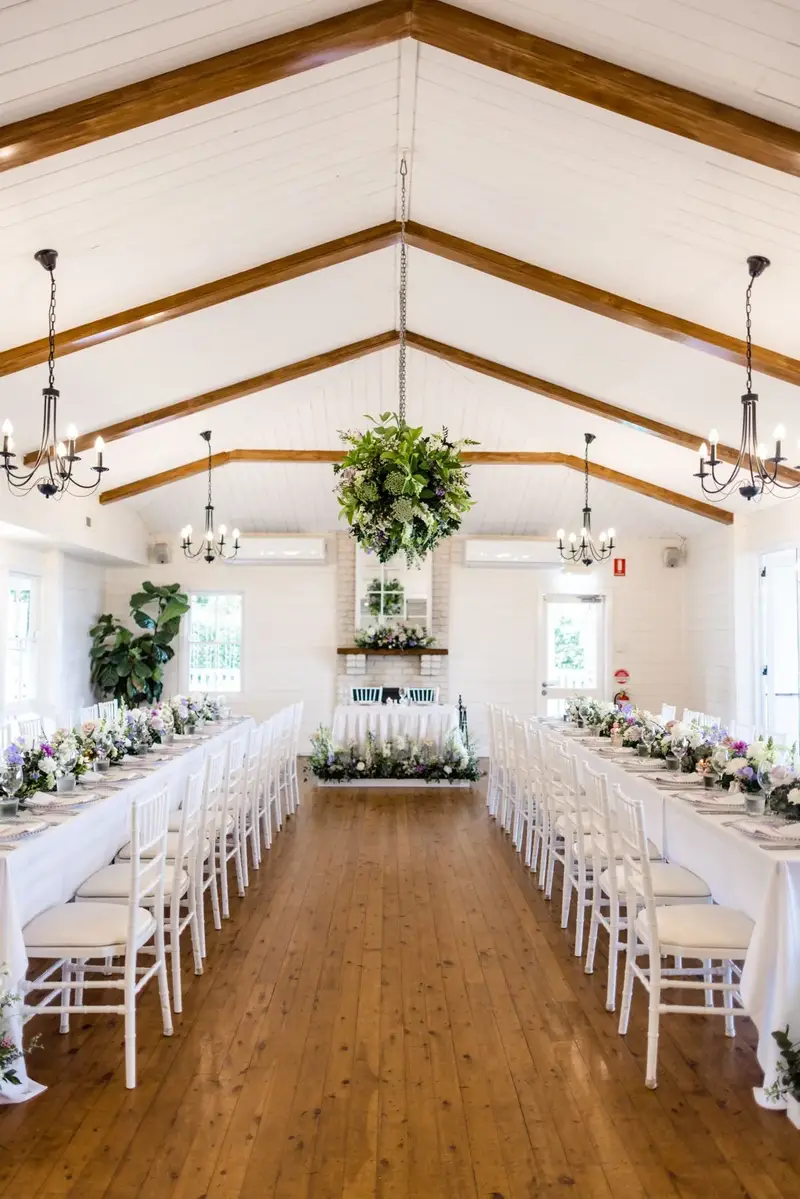
Tour it empty first — this is when flaws can't hide. (Illustrative stock photo via Pexels.)
Touring before your numbers are set is how couples blow the whole budget on the room and starve flowers, photos, and music. Lock two numbers first: a realistic guest estimate including parent additions, and a total wedding budget with the venue share carved out. Industry guidance consistently places venue cost at 25 to 35 percent of total spend for space rental alone, and about 30 percent including food and beverage. On a 30,000 total budget that means roughly 7,500 to 10,500 for the venue itself. United States averages sat near 7,900 in 2025, with do-it-yourself spaces at 2,000 to 5,000, traditional mid-range rooms at 6,000 to 12,000, and luxury all-inclusive properties at 15,000 to 25,000 and up — varying hard by region, season, and weekday.
- Guest math: count everyone, then add the parents bump. A room too small creates a crisis if more guests accept than fit.
- Cost per guest: divide each quote by comfortable capacity, not fire-code maximum. Maximums are rarely comfortable.
- Date flexibility: weekday weddings can run 30 to 50 percent cheaper than Saturdays, and January through March beats September through October.
- You're ready when: you can state budget, headcount, and two acceptable months. That's tour-ready.
- Walk away when: the venue can't share a pricing guide or confirm your date range. Don't tour blind.
- Spec to confirm: what the site fee actually includes: tables, chairs, linens, audio, dance floor, parking, and setup hours.
Match the Venue Type to Your Vision
A modern celebration fits art galleries, restaurants, and warehouse spaces, while a nature-led day fits parks, ranches, barns, vineyards, and gardens. The type sets weather risk, catering freedom, vendor choice, setup time, and look in one move. Ballrooms and hotels bring choreographed service with in-house catering and per-plate pricing. Rooftops and lofts bring style with medium weather risk. Destination resorts simplify logistics with low vendor freedom. Backyard and restaurant buyouts suit small lists fast. Pick the type that already looks like your invitations — forcing a rustic vision into a ballroom (or the reverse) burns decor money you'll never get back.
Video: 10 Tips For Picking The Perfect Wedding Venue — Here Comes The Guide, December 2023.
Shortlist Five to Eight, Tour Three to Five
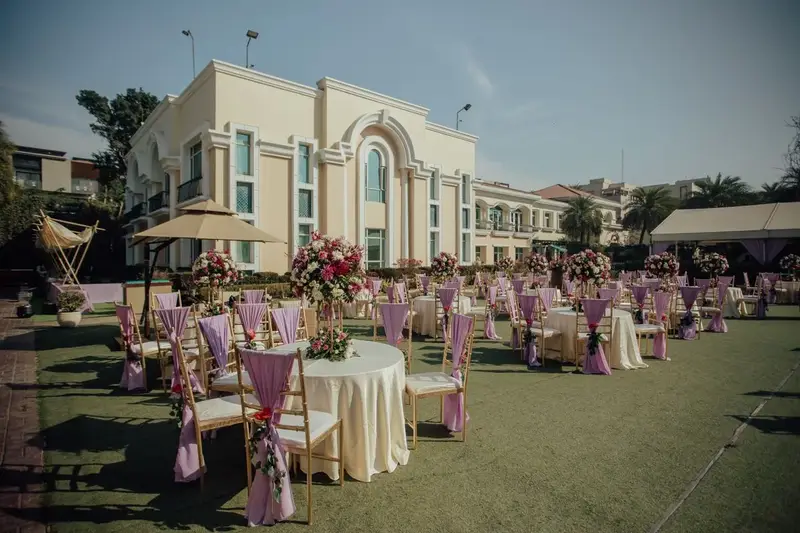
Outdoor setup to judge: ceremony flow, seating sightlines, and where the sun lands. (Illustrative stock photo via Pexels.)
Research online into a shortlist of five to eight venues that pass your budget, availability, and capacity filters, then tour three to five serious contenders. Fewer than three leaves you nothing to compare; more than seven breeds paralysis. View at most two per day with notebook, partner, photos, and video at each. Ask for floor plans and footage from past weddings at your guest size — not the styled maximum. Follow up on forgotten questions by call before deciding, and talk to vendors who've worked the room: they remember the loading dock, the power outlets, and the noise curfew the brochure skipped.
- Shortlist it when: the venue shares availability, a pricing guide, and capacity comfort for your count up front.
- Run when: staff dodge questions on fees, curfews, or vendor rules. Evasion now means surprises later.
Ask the Thirty Questions That Prevent Regret
Bring this checklist to every tour and photograph each answer zone. Ceremony space: built-in audio or bring your own, seating included or rented, and the indoor-to-outdoor transition distance. Reception room: table shapes that fit your layout since rounds seat the most and squares the least, dance floor included, room for band or DJ plus photo booth, and rules on candles, confetti, sparklers, and smoke. Catering: in-house required or outside allowed, tasting included, cake-cutting and corkage fees, per-plate versus package math, and late-night options. Logistics: vendor load-in time, setup and breakdown ownership, gift storage, getting-ready suites, parking and shuttles, nearby hotels with blocks, and whether more than one event runs per day. Contract: deposit size and refund terms, balance due date usually 30 to 90 days out, overtime rate, service and admin fees, and the weather plan in writing.
Read the Contract Traps and Red Flags
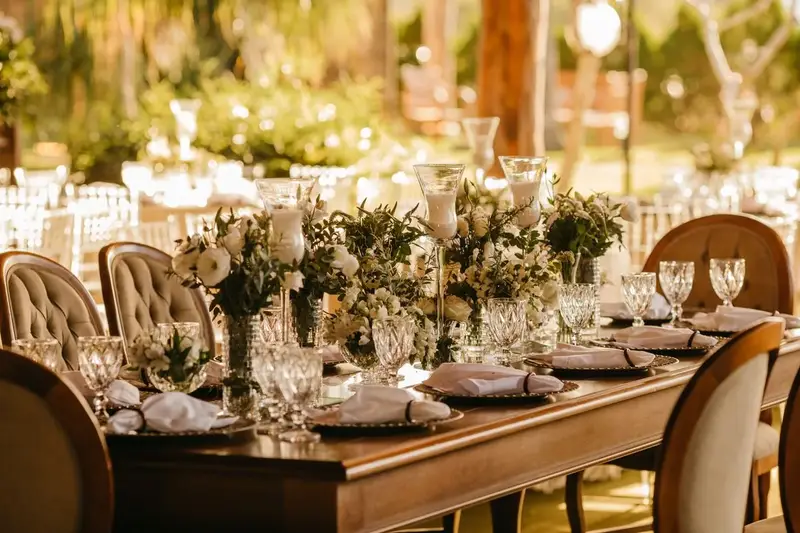
The money shot for contracts: what's actually on the tables. (Illustrative stock photo via Pexels.)
Venues sell space, so assume the tour highlights strengths and hides the rest. Demand the full cost breakdown with service charges, taxes, gratuity rules, and overtime per half hour. Confirm who the venue coordinator is: they run the building, not your wedding, and their loyalty sits with the property. Your own planner or day-of coordinator runs your vendors and timeline. Watch for pressure to sign today, vague weather language like "alternative space subject to availability," exclusive vendor lists with markups, and payment schedules demanding most money many months early. Get the rain plan as a named room or included tent — never a promise.
Weigh Guest Experience Like a Host
- Travel: distance from airport, station, and highway, plus shuttle or parking for drivers.
- Stay: hotel blocks at mixed budgets near the venue, with check-in times that fit setup day.
- Comfort: seating with elbow room, climate control, restrooms per head, and quiet corners for elders.
- Access: step-free routes, accessible restrooms, and sensory-friendly volume and lighting options.
- Flow: ceremony to cocktails to reception without long walks, traffic gaps, or dead changeover time.
Book on a Realistic Timeline
Start twelve to eighteen months out for prime Saturdays, nine to twelve months minimum for most markets, and eighteen to twenty-four for marquee properties. Under six months, pivot to micro-weddings, restaurant buyouts, weekday slots, or morning timelines where discounts run deepest. Put the planner first when you can, since planner relationships unlock honest reads on rooms and preferred pricing. And never sign before the venue confirms your date hold, the payment schedule, and the cancellation math in writing. Ever.
Setup Tips to Decide Faster
Score every tour on the same five lines: cost per comfortable guest, weather certainty, vendor freedom, guest travel ease, and look match. Kill any venue that fails weather or budget regardless of charm — charm won't keep anyone dry. Revisit your top two at your season and time of day to see real light and noise. Read two recent reviews mentioning rain, overtime, and coordinator responsiveness. Then sleep one night before wiring the deposit. Morning clarity is free.
Wedding Venue FAQ
How far in advance should we book a wedding venue?
Book twelve to eighteen months ahead for Saturdays in peak season, nine to twelve months for most dates. Marquee venues sell prime months two years out, while weekdays and winter mornings can open inside six months.
What share of the budget goes to the venue?
Plan 25 to 35 percent of total spend for the space rental, or about 30 percent including food and beverage. On a 30,000 budget that is roughly 7,500 to 10,500 for the venue before florals, photo, and music.
How many venues should we tour?
Shortlist five to eight online, tour three to five in person, and cap visits at two per day. Fewer leaves no baseline, more blurs memory even with photos.
What is the difference between a venue coordinator and a wedding planner?
The venue coordinator runs the building and its vendors on the day. Your planner runs your whole wedding for you. For complex vendor teams, you want both — with roles written down, not assumed over handshakes.
What should the contract spell out?
Deposit and refund terms, balance due date, overtime rate, service and admin fees, vendor and decor rules, setup hours, and the exact weather backup room or tent. Verbal promises don't count — if it isn't written, it wasn't said.
Bottom Line
Set budget plus guest count first, tour three to five with the checklist, and sign only the room whose weather backup and fees read clean in writing.
Related Guides
- Wedding Venue Types Explained
- How To Tour A Wedding Venue
- How To Compare Wedding Venue Costs
- Wedding Venue Red Flags To Avoid
- Venue Availability Booking Mistakes
- Indoor Vs Outdoor Wedding Venue
- How To Negotiate A Wedding Venue Contract
- Wedding Venue Deposit And Fee Guide
- How to Check Tire Tread Depth at Home in 2026
- How to Measure Inseam for Perfect Pants Length in 2026
- How to Snowboard for Beginners in 2026
- How to Measure a Room for Furniture in 2026 (Sketch, Clearance, Delivery)
Sources: Paperlust — Venue Checklist; Brides — Perfect Venue; Vogue — Venue Guide; YouTube — 10 Tips For Picking The Perfect Wedding Venue; Photos: Pexels 16082423, 32994495, 12846017.