 Remington Croft
How Long Is a Semester in 2026? (College, High School and Summer Terms)
Last updated: September 14, 2026 — rechecked term lengths against federal aid definitions and university calendars; first version of this guide.
Reviewed by Emily Holmes, General Reviewer, following our test method.
How long is a semester? A college fall or spring semester usually runs 15 to 17 weeks including exams, or about three and a half to four months. You'll find high school and summer terms play by different clocks.
Quick answer: college fall and spring at 15 to 17 weeks fit most university students. Summer and mini terms at 3 to 12 weeks fit catch-up or acceleration. High school semesters near 18 weeks fit K-12 planners. Details below.
Quick Comparison: Semester Lengths at a Glance
Pin down which calendar you're on first. Semester, quarter, and high school schedules only look interchangeable from far away.
| Method | Key Points | Best For |
|---|---|---|
| College fall and spring semesters | 15 to 17 weeks with exams; fall Aug/Sep to Dec; spring Jan to May | Most university students |
| Summer and mini terms | 3 to 12 weeks condensed; lighter catalogs; heavier weekly load | Catch-up or acceleration |
| High school semesters and quarters | High school halves near 18 weeks reported; quarter systems run 10 to 12 weeks | K-12 planners and quarter-system students |
Dive deeper: Semester vs Quarter vs Trimester Calendar Compared; Financial Aid Rules Tied to Semester Length and Credits; How Long Is Fall Semester in Weeks and Months.
Length grounding spans regulators and campuses. Semesters contain 14 to 21 weeks of instructional time per the 2026-2027 Federal Student Aid Handbook. The 15-to-17-week campus norm matches Coursera — college start dates and Furman — semester length. Month-by-month structure and degree math trace per CollegeCommit — semester explained. Claims below stick to what those sources substantiate, per our test method.
College Fall and Spring: 15 to 17 Weeks
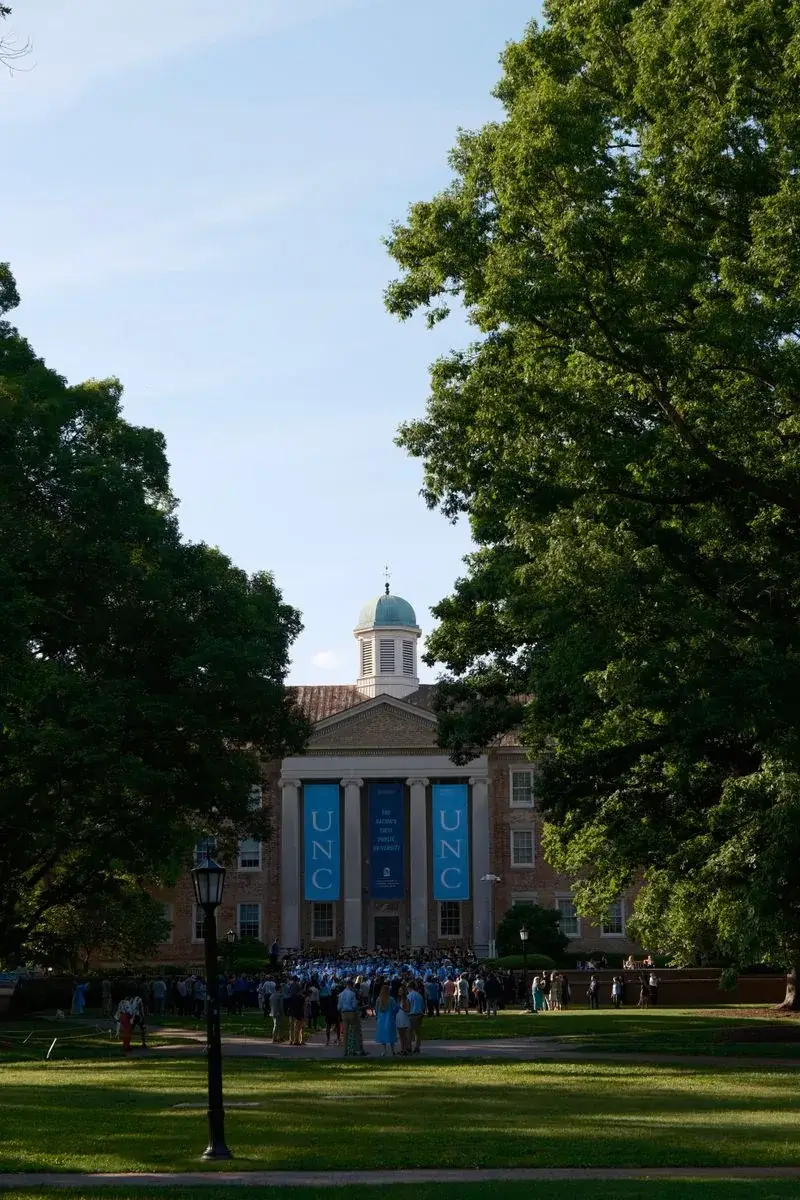
Fifteen to seventeen weeks, exams included, is the campus norm. (Illustrative stock photo via Pexels.)
Fall typically opens in late August or early September and closes with finals in early to mid-December. Spring picks up in mid-to-late January and runs into May, pausing for a week of spring break. Thanksgiving and winter breaks punctuate fall the same way, which is why calendar months overstate classroom weeks.
That final exam week counts inside the total, not after it. When schools quote fifteen weeks, roughly fourteen hold instruction and the last holds finals. Plan travel only after your own exam schedule posts.
- Use it when: you're mapping housing, work shifts, or travel around a standard term
- Skip it when: you're on quarters or in an accelerated program with its own calendar
- Fact to confirm: two semesters make one academic year, and eight make a standard four-year bachelor's degree
Summer and Mini Terms: 3 to 12 Condensed Weeks

Summer compresses a full course into weeks, not months. (Illustrative stock photo via Pexels.)
Summer sessions squeeze a semester's material into anywhere from three to twelve weeks, with six to eight the common middle. The catalog shrinks, the pace doubles, and a single course can feel like a full load. Winter minis between fall and spring work the same trick in three or four weeks.
That's exactly why summer rescues graduation timelines. One or two condensed courses yearly can cover the gap between twelve-credit comfort and fifteen-credit pace. Just leave real rest in the plan, since burnout compounds at double speed.
- You'll love it if: you're retaking a course, pulling ahead, or protecting a four-year finish
- Walk away if: you need the full term's rhythm to absorb hard material like labs or languages
- Fact to confirm: federal rules let summer terms run shorter than the 14-week semester floor
High School Halves and Quarter Systems

High school halves run longer; quarter terms run shorter. (Illustrative stock photo via Pexels.)
High schools on halves report terms near eighteen to twenty weeks, stretching the year across two long grading blocks. Quarter-system colleges flip the other way: four terms of about ten to twelve weeks across fall, winter, spring, and summer. Trimester schools sit between at roughly twelve to thirteen weeks times three.
Credits follow the calendar. A bachelor's degree wants about 120 semester credits but near 180 quarter credits for the same diploma. Transfer students should convert before assuming anything carries over one to one.
Medical and technical schools add their own wrinkle with trimester calendars near twelve to thirteen weeks. Same degree, third rhythm. Whatever system you enter, learn its credit currency before planning anything else.
- Grab it if: you're comparing high school planning or choosing between semester and quarter schools
- Leave it if: you're mid-semester at a standard college, where none of this changes your dates
- Fact to confirm: high-school figures come from education references rather than federal definitions, so confirm with your district
Why Fifteen Weeks? The Instructional-Time Rule
Here's the mechanism most guides skip. Federal definitions count instructional time, not calendar pages: semesters span 14 to 21 instructional weeks, and aid formulas require about 30 such weeks across the academic year. Breaks, orientation, and exam-adjacent downtime don't pad the count the way you might assume.
That rule explains the whole shape of college life. Fifteen instructional weeks plus finals fits the 30-week aid year across two terms, keeps Pell and loan formulas on standard schedules, and sets the rhythm every syllabus follows. When a school deviates much below it, aid math switches to alternate formulas behind the scenes.
- Fourteen-week floors: the shortest terms still qualifying as standard semesters
- Thirty-week years: the instructional total that keeps standard aid formulas intact
- Fact to confirm: schools define their own calendars inside these federal minimums, so exact dates always vary
Mistakes That Mismeasure the Term
After comparing calendar pages with student questions, five misreads cause most semester confusion. Each mistakes one kind of week for another.
- Counting breaks as class: Thanksgiving and spring break sit inside the term but outside instruction, so subtract them from study plans
- Forgetting finals week: the last week is exams, not review time you can travel through
- Mixing months with weeks: four calendar months hold about fifteen instructional weeks once breaks exit
- Assuming quarters equal semesters: ten-week quarters compress pacing and convert credits differently
- Booking travel early: final exam schedules post late, so refundable tickets beat confident ones
Setup Tips to Plan Around Any Term
Download your school's official academic calendar on day one and mark instruction start, break boundaries, and finals. Count backward from finals to place midterms, big projects, and work blackout dates. If you're stacking summer courses, cap the load at what double pace allows and guard one full rest week. That single calendar session prevents nearly every timing collision the semester can throw at you.
Semester Length FAQ
How long is a college semester?
Usually 15 to 17 weeks including final exams, or about three and a half to four months. Fall runs late August or early September into December, and spring runs January into May.
How long is a semester in high school?
Reported figures sit near 18 to 20 weeks per half on semester schedules. Confirm with your district, since K-12 calendars vary locally.
How long is a summer semester?
Typically 3 to 12 weeks condensed, with 6 to 8 the common middle. Expect a lighter catalog with a heavier weekly workload than fall or spring.
How many semesters are in a year or a degree?
Two per academic year (fall and spring), with summer optional. A standard four-year bachelor's degree spans eight semesters. Count your own terms against eight and you'll see your finish line clearly.
What is the difference between semesters and quarters?
Semesters run 15 to 17 weeks twice a year; quarters run 10 to 12 weeks up to four times a year. Degree totals differ too: about 120 semester credits versus 180 quarter credits.
Bottom Line
College semesters run 15 to 17 weeks, summers compress to weeks, and high school halves stretch longer. Count instructional weeks, not months.
Related Guides
- Semester vs Quarter vs Trimester Calendar Compared
- Financial Aid Rules Tied to Semester Length and Credits
- How Long Is Fall Semester in Weeks and Months
- How Long Is Spring Semester Start to Finish
- How Long Is Summer Semester and Mini Terms Explained
- College Semester Start and End Dates Explained
- How to Plan Your Credit Load Each Semester
- Semester Length vs Semester Hours What the Difference Is
- Freshman Fall Semester Schedule Planning Guide
- Winter Intersession vs Spring Semester Length and Use
- Semester Length by Country US UK and Canada Compared
- How Many Credit Hours Is Full Time in 2026? (College, Grad School and Aid Rules)
- How to Measure a Room for Furniture in 2026
- What Does Collate Mean When Printing in 2026? (Collated vs Uncollated + Printer Picks)
- How Much Is a 3D Printer in 2026: Price Tiers and Running Costs
Sources: Federal Student Aid Handbook 2026-2027 — academic calendars; Coursera — college start dates; Furman — semester length; CollegeCommit — semester explained; Photos: Pexels.