 Remington Croft
Things to Draw When Bored in 2026 (Easy Doodles, Sketches and 5-Minute Ideas)
Last updated: September 14, 2026 — rechecked beginner drawing guidance against artist-educator sources; first version of this guide.
Reviewed by Emily Holmes, General Reviewer, following our test method.
Things to draw when bored? Start with five-minute doodles like flowers, stars, mushrooms, and coffee cups, then step up to cat faces and mugs when energy returns. You'll fill the page fastest by matching the idea to your mood, not by hunting the perfect subject.
Quick answer: 5-minute doodles work for most bored beginners with zero energy. Step-by-step subjects are best when you want real skill from the session. Themed pages and challenges are best for filling a whole afternoon. Details below.
Quick Comparison: Boredom-Drawing Paths at a Glance
Pick by energy first, subject second. You can run all three paths with the same pen and paper, so you can switch mid-page.
| Method | Key Points | Best For |
|---|---|---|
| 5-minute doodles | Flowers, stars, hearts, mushrooms, food faces; circles plus lines; repeat each 5 to 10 times | Most bored beginners with zero energy |
| Step-by-step subjects | Cat faces, butterflies, houses, mugs from angles; basic shapes first, details last | Building real skill from the session |
| Themed pages and challenges | Pattern grids, mandala rings, 10-minute exercise, full sketchbook spreads | Filling a whole afternoon |
Dive deeper: Easy Drawing Categories Explained; How to Draw Simple Doodles For Beginners; How to Draw Cute Animals When Bored.
Beginner grounding is consistent across educator sources. Simple subjects drawn with care beat complex ones per Chris Wilson Studio — easy drawing ideas. A pen plus a notebook suffices to start per TheMallowCloud — doodle beginner guide. Basic shapes form every subject per Artsydee — easy doodle ideas. Observe big shapes before details per Art of Sketching — sketchbook prompts. Claims below stick to what those sources substantiate, per our test method.
Five-Minute Doodles: Start Here Every Time
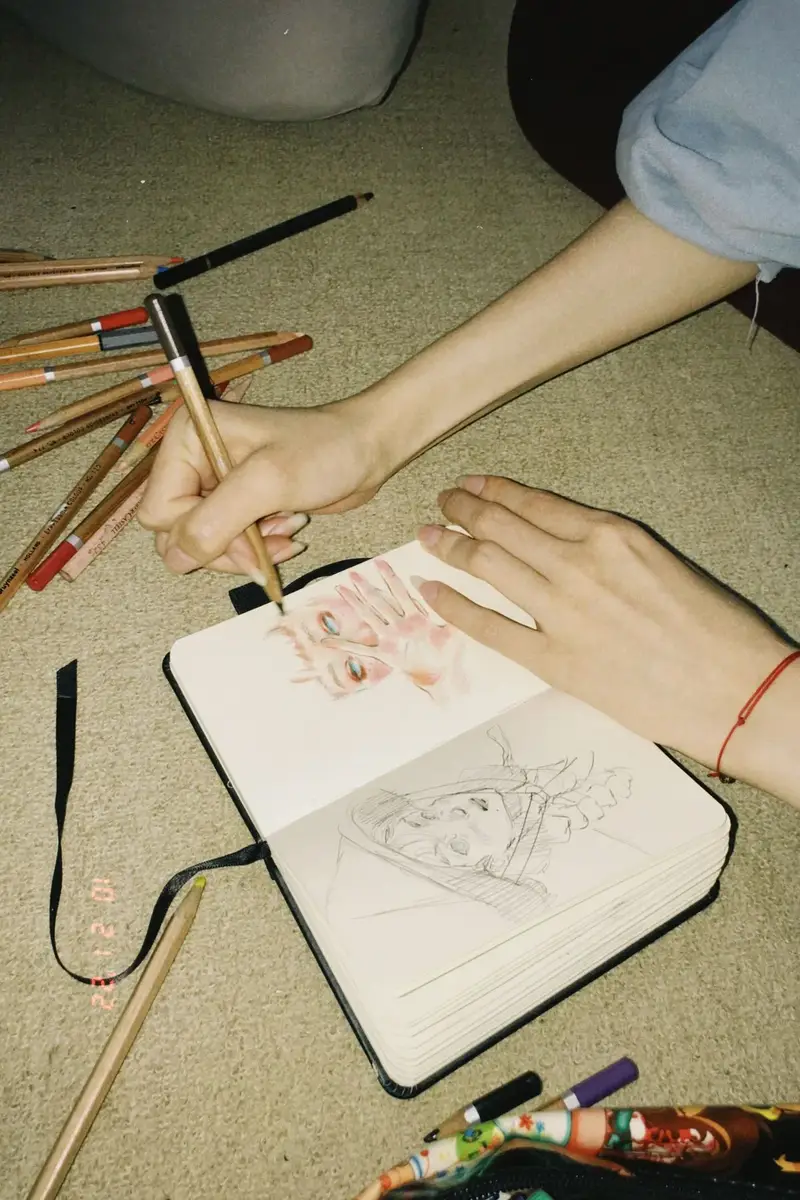
Small, repeatable, done in minutes. That's the whole format. (Illustrative stock photo via Pexels.)
You know the blank-page stare. The cure is something finishable before motivation matters. Draw a five-petal daisy: one center circle, five oval petals, a stem, two leaves. Then stars, hearts, clouds, mushrooms, coffee cups, planets, and butterflies. Each takes minutes, and drawing each one five to ten times fills a page while training your hand.
Give faces to your food and watch boredom lose. A triangle pizza slice with dot eyes, an ice cream cone with a smile, a coffee cup with a sleepy face. The kawaii formula never changes: two eyes plus one smile line. Wobble is welcome here, since hand-drawn charm beats ruler-straight lines.
- Use it when: energy reads near zero and you need a win within minutes
- Skip it when: you're warmed up and craving a subject with bones (see below)
- Fact to confirm: repetition beats variety for skill, so redrawing one doodle ten times teaches more than ten different ones
Step-by-Step Subjects: Level Up Without Tears
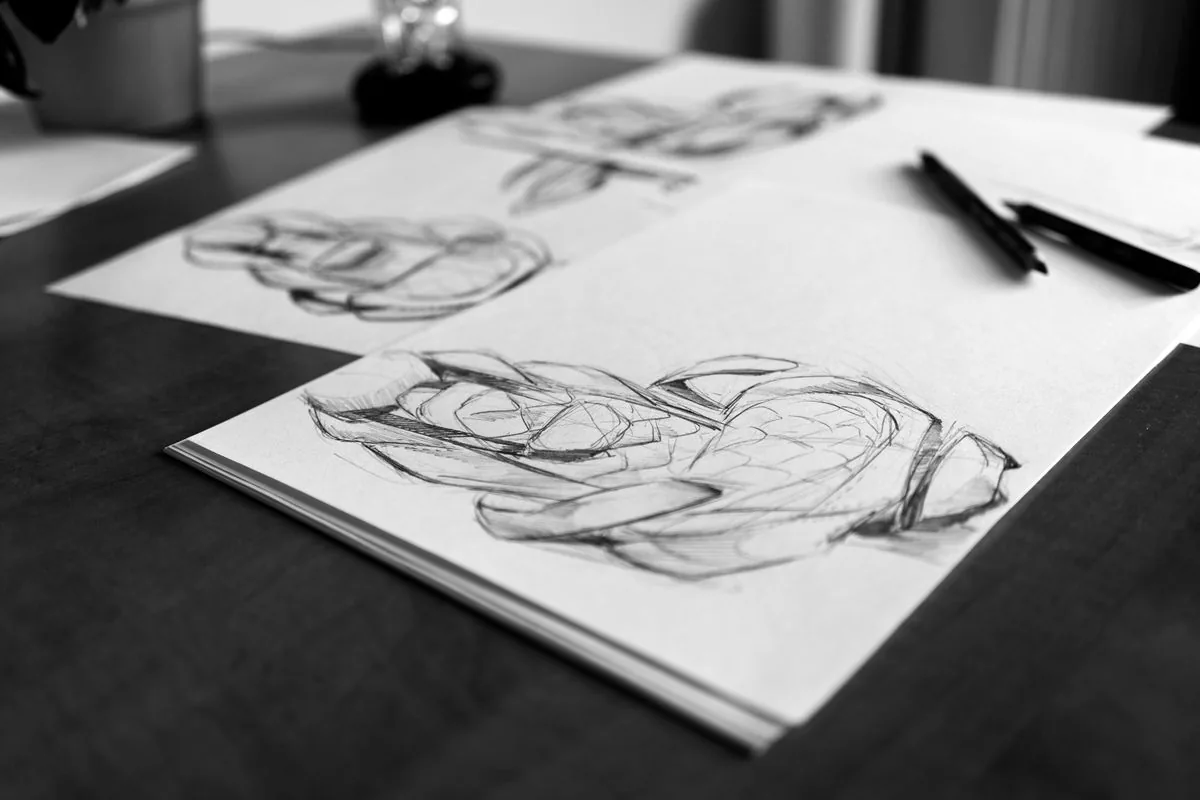
Every subject here starts as circles and ovals. No exceptions. (Illustrative stock photo via Pexels.)
Ready for something with structure? Build every subject from basic shapes. A cat face is a circle plus triangle ears plus whisker lines. A butterfly is one body oval with four wing curves. A house is a square wearing a triangle hat. A mug drawn from three angles teaches perspective faster than any lecture.
Then add the two techniques that make simple drawings look finished. Vary pencil pressure: dark outer edges, light inner lines, heavier shade on one side. Add hatching for shadows: parallel lines for soft shade, crossed lines for deeper tone. A triangle-cat may look silly at first, and that's exactly how every sketcher starts.
- You'll love it if: you want visible progress from a single sitting, not just time passed
- Walk away if: your hand still feels stiff, since ten more minutes of doodles warms you better
- Fact to confirm: eyes sit roughly halfway down the head, the single correction that fixes most beginner faces
Themed Pages: Fill the Whole Afternoon
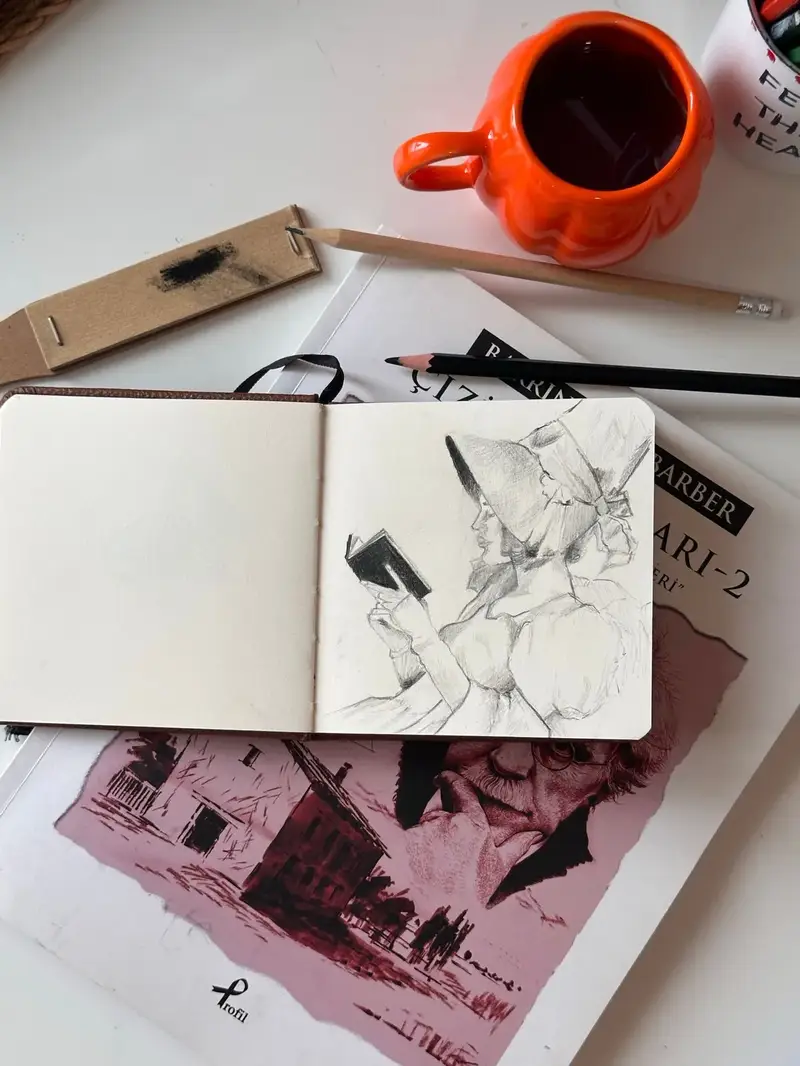
One theme per spread turns scattered doodles into a finished page. (Illustrative stock photo via Pexels.)
When an hour stretches ahead, give it a container. Grid nine squares and fill each with a different pattern: dots, waves, crosses, scallops. Build a mandala outward: center circle, petal ring, triangle ring, dot ring. Draw one object five ways: sixty seconds, five minutes, ten minutes, wrong hand, continuous line.
Or run the ten-minute exercise educators swear by. One minute each of circles, leaves, stars, faces, cubes, shadows, mashed-up objects, a tiny scene, patterns, and filler details. Don't erase anything for the full ten. You'll end with a page that looks alive precisely because it isn't precious.
- Grab it if: a rainy afternoon yawns open and single doodles feel too small
- Leave it if: you've got five minutes, since these formats need runway
- Fact to confirm: starting in the page center and building outward beats top-left marching, which feels like homework
Match the Idea to Your Energy
Here's what the big listicles never tell you: the right idea depends on your battery, not your talent. Zero energy means pen doodles on scrap paper, where erasing is impossible and therefore liberating. Medium energy means one real subject from life, like your shoe exactly as it landed. Full energy means a themed spread or an outdoor sketch with actual shadows.
Tired-day fallbacks live in a short list worth memorizing. Your feet, one fruit from three angles, crumpled paper under a lamp, the mess on your desk, a chair in straight lines only. Each takes minutes and asks nothing. Keep this list where your sketchbook lives and decision fatigue disappears.
- Zero energy: repeat patterns and food faces that forgive everything
- Medium energy: one observed object with light and shadow treated honestly
- Fact to confirm: starting is the breakthrough mechanism, since simple prompts surprise you once the pencil moves
Mistakes That Kill the Fun
After comparing educator advice with beginner forums, five errors end more drawing sessions than lack of talent. Each feels reasonable in the moment and proves costly on paper, and you'll recognize at least three.
- Starting too hard: a shaded portrait as attempt one guarantees frustration, so earn complexity through mugs and leaves first
- Erasing to death: pen forces forward motion, which is why many teachers recommend it over pencil for beginners
- Comparing to pros: social feeds show year-ten work, so measure against your own last page instead
- Scattering pages: loose sheets hide progress, while one dated sketchbook becomes proof you improve
- Skipping the timer: untimed sessions invite fussing, while ten focused minutes finish things
Setup Tips to Draw More With Less Gear
Keep one sketchbook, not five, and date every page with the subject and one practice note. Set a ten-minute timer before each session so finishing beats fussing. Spend thirty seconds just looking before each sketch, since observation is the actual skill being trained. Look more than you draw and your lines will follow.
Check price for a sketchbook and fineliner pen set on Amazon
Drawing When Bored FAQ
What should I draw when bored?
Start with five-minute doodles: flowers, stars, mushrooms, coffee cups, or food with faces. They finish fast, need no setup, and warm your hand for bigger subjects.
What are easy things to draw for beginners?
Anything built from circles, squares, and triangles: cat faces, butterflies, houses, mugs, and leaves. Simple subjects drawn with care build more skill than ambitious ones drawn anxiously.
What do I need to start drawing?
A pen and paper is genuinely enough. A sketchbook plus a fineliner pen makes a fine upgrade later, but neither talent nor expensive tools gates the first page. If you already own both, you can start right now.
How can I get better at drawing quickly?
Draw one simple subject repeatedly, use a timer, and look longer than you draw. Five focused minutes daily builds steadier hands than occasional long sessions.
Should I use pen or pencil as a beginner?
Pen helps most beginners because it removes erasing and forces flow. Start in pencil if nerves demand it, then switch to pen once shapes feel familiar.
Bottom Line
Doodle small things fast when energy runs low, build shaped subjects when it returns, and theme the page when afternoon stretches. Pen, paper, timer, done.
Related Guides
- Easy Drawing Categories Explained
- How To Draw Simple Doodles For Beginners
- How To Draw Cute Animals When Bored
- Drawing Proportions Looking Off Fixes
- Drawing Supplies For Beginners Guide
- Pencil Vs Pen Drawing For Fun
- How To Fill A Sketchbook Daily
- Sketchbook And Pen Cost Guide
- How to Sew a Button in 2026
- What Does Collate Mean When Printing in 2026? (Collated vs Uncollated + Printer Picks)
- How Much Is a 3D Printer in 2026: Price Tiers and Running Costs
- How to Make Cold Foam at Home in 2026
Sources: Chris Wilson Studio — easy drawing ideas; TheMallowCloud — doodle beginner guide; Artsydee — easy doodle ideas; Art of Sketching — sketchbook prompts; Photos: Pexels.