 Remington Croft
How to Remove Rust From Cast Iron in 2026 (Spots to Full Restore)
Last updated: September 12, 2026 — rechecked rust-removal methods and reseasoning steps against maker and lab-tested guides and refreshed prevention routine.
Reviewed by Emily Holmes, General Reviewer, following our test method.
How to remove rust from cast iron starts with judging depth: rub light spots with salt or an eraser, soak heavy rust in half vinegar, then wash, dry on heat, and reseason thin. Never cook on rust because rust is not food safe.
Quick answer: salt or rust eraser is best for light surface spots. Vinegar soak with checks is best for heavy coverage. Thin-oil oven reseason is best for the finish after any deep clean. Details below — you've got this.
Quick Comparison: Rust Removal Paths at a Glance
Match the method to the rust depth. Light spots need minutes; full orange coverage needs hours plus reseasoning. Don't guess the depth — the fingernail test below settles it.
| Method | Key Points | Best For |
|---|---|---|
| Salt or eraser rub | One-third cup kosher salt or eraser, cool dry pan, minutes, oil after | Best overall light rust |
| Cleanser slurry scrub | Slurry plus stainless scrubber, gloves, wash and dry on heat | Best value stubborn patches |
| Vinegar soak restore | Equal vinegar and water, submerged, checked often, reseason after | Best full-rust rescue |
Dive deeper: Cast Iron Rust Levels Explained; How to Strip Rust With Vinegar Soak; How to Season Cast Iron After Rust Removal.
Rub light rust off dry with a rough sponge per Wirecutter. Scour small spots with an eraser on a cool dry skillet, then wash, dry, and oil per Lodge. Soak serious rust in equal vinegar and water with frequent checks before scrubbing and reseasoning per Bon Appetit.
Safety First: Judge Depth Before Touching Steel
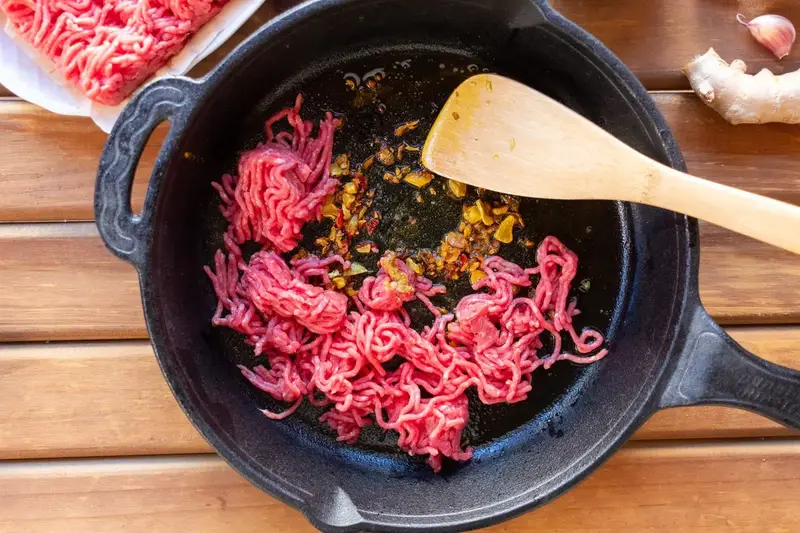
Back in action: a restored skillet doing what it does best. (Illustrative stock photo via Pexels.)
Rust isn't food safe, so remove every trace before the next cook. Surface dust that wipes orange on a towel is light work. Raised flaking that pits under a fingernail is a deep restore with reseasoning after, because stripping takes seasoning with it. Enameled cast iron plays by different rules: skip abrasives and acids entirely and use gentle cleaners only, since scouring destroys the enamel. When in doubt whether a thrifted pan is bare or enameled, treat glossy colored coating as enamel and stop. Your stomach will thank you.
Rust needs only metal, air, and moisture meeting over time. The usual culprits are leaving the pan soaking in the sink, running it through the dishwasher, towel-drying without a heat finish, storing it in a humid cabinet or garage, and stacking bare iron where trapped condensation sits between pieces. Even careful owners meet rust through houseguests who air-dry the pan or a few humid weeks in summer. Knowing your cause matters because a soaking habit needs a routine fix while a storage spot needs a location fix.
- Light: faint orange dust, no pitting. Salt or eraser territory.
- Heavy: widespread flaking or dull rough patches. Soak plus reseason territory.
- Stop rule: vinegar eating past rust into grey iron means the soak ran too long. Check often and pull early.
Method 1: Salt or Eraser for Light Spots
Start with a cool, dry skillet. For salt, rub about one-third cup of kosher salt into the spots with a towel or halved raw potato — its mild oxalic acid helps loosen rust while the grains scour. For an eraser, scour the dry pan until orange gives way to grey iron. Both suit a few spots from air-drying or a damp cabinet. Wash with warm water and a little mild soap, rinse, and dry immediately and thoroughly on low stovetop heat for a few minutes. Finish with a thin wiped oil layer. Small-spot jobs often need no full oven reseason at all.
Video: Help! Did I Ruin My Cast Iron Skillet — Lodge Cast Iron, November 2025.
- Grab this method when: rust is a few spots and seasoning elsewhere looks intact.
- Skip soaking if: a dry rub already clears to clean metal. Extra acid only costs seasoning.
Method 2: Cleanser Slurry for Stubborn Patches

Sizzle as proof of life — dinner's back on. (Illustrative stock photo via Pexels.)
Mix a powdered cleanser with a couple of tablespoons of water into a slurry in the pan and scrub with a stainless scrubber while wearing rubber gloves. This bridges the gap between eraser rubbing and full soaking for pans with broad dull rust that resists salt. Work in sections, rinse often to inspect, and stop at clean metal. Wash, dry on heat, and judge whether the patch needs a full reseason or just oiled cooking — dull patchy surfaces usually want the oven.
Method 3: Vinegar Soak for Full Restores
Submerge the whole pan, handle included, in equal parts distilled white vinegar and water in a bucket or deep foil tray. Check every 15 minutes and pull the moment rust flakes easily — anywhere from an hour to eight depending on depth. Never pass 24 hours, or the acid attacks the iron itself and ruins the pan. Rinse under running water at once, watching for flash rust blooming on wet metal, then scrub remaining traces with soap and an abrasive pad. Dry immediately on low heat until bone dry, because any lingering moisture restarts the cycle within hours.
- Go full soak when: rust covers most of the pan — or you've rescued a secondhand find worth saving.
- Gloves and ventilation: vinegar fumes plus scrubbing grime deserve both.
Reseason Thin or It Turns Sticky
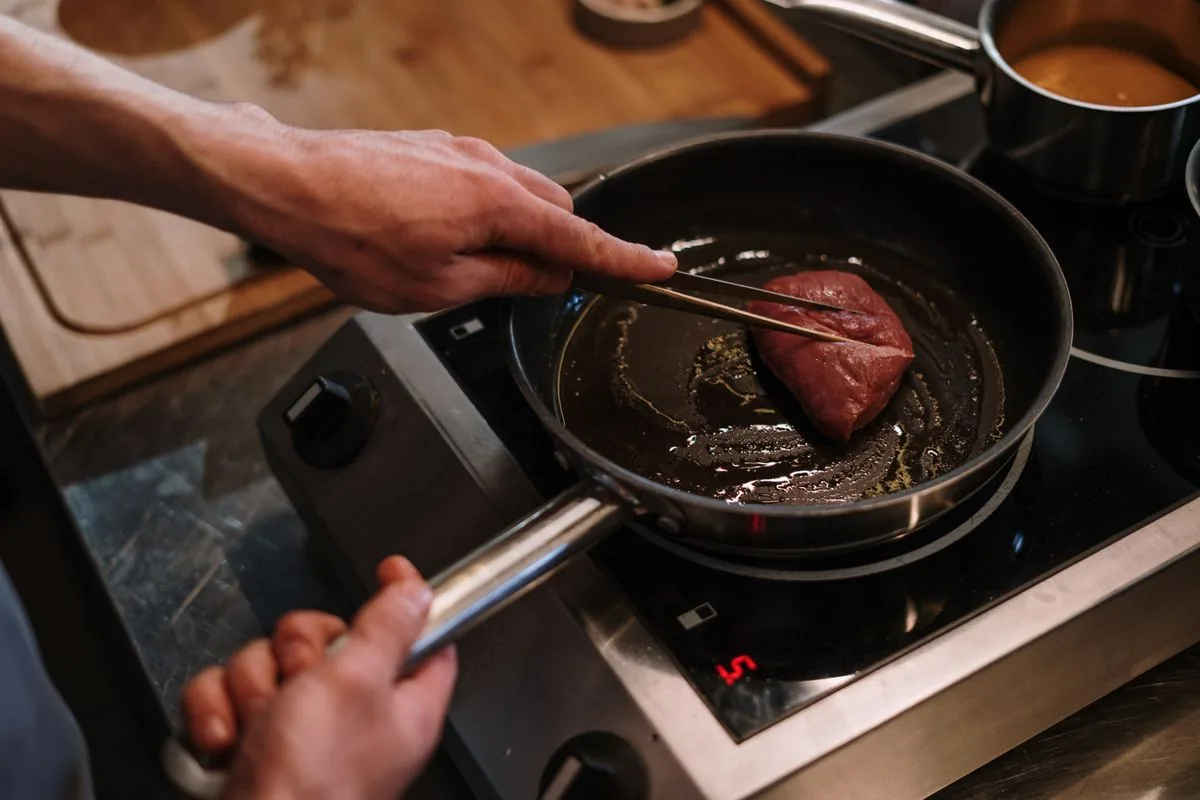
A properly seasoned pan earns its sear — listen for it. (Illustrative stock photo via Pexels.)
Heat the oven to 450 to 500 degrees with foil on the lower rack. Wipe a thin even coat of cooking oil inside and out, then wipe again until it looks nearly dry — excess oil bakes gummy, and gummy undoes your afternoon. Any plain cooking oil with a high smoke point works for this step. Bake upside down for one hour and cool in the oven. Repeat yearly once or twice for upkeep, and know that regular oily cooking maintains seasoning so well that oven reseasons become rare. Sticky surfaces mean too much oil went in; fix it by baking the pan upside down empty for another hour. If food still sticks in dull patchy spots after one round, run a second thin coat and bake again rather than laying one thick coat.
Keep Rust From Returning
- Wash right after cooking: warm water with a little soap is fine. Never soak, and never dishwasher — both are rust invitations.
- Dry on heat: towel first, then minutes on low flame. Counter air-drying invites spots overnight, and spots invite weekends like this one.
- Oil thin every time: wipe until no drips show when tilted.
- Store dry: cool low-humidity spot with paper towel between stacked pieces.
- No thermal shock: never plunge hot iron into cold water. Warping and cracks follow.
Setup Tips to Get Better Results Faster
Try a dry salt or eraser rub first for light spots, since soaking strips seasoning that is otherwise intact. If you soak in equal vinegar and water, check often and dry on heat immediately, then finish with a thin wiped oil layer.
Cast Iron Rust FAQ
Is rusty cast iron safe to cook on?
No. Rust isn't food safe, so remove all of it before cooking. Light dust needs a rub and wash, while flaking coverage needs a soak plus reseason. When clean metal shows everywhere, you're safe again.
Can I use soap on cast iron?
Yes, a little mild soap with warm water is fine at any stage, especially during a restore when no seasoning remains to protect. Rinse well and dry on heat immediately after.
Why did my pan turn sticky after oiling?
Too much oil went on before baking. Wipe coats until nearly dry, bake upside down so excess drips away, and re-bake sticky pans empty for an hour at high heat.
How long can I soak cast iron in vinegar?
Check every 15 minutes and pull when rust flakes, usually within hours. Never exceed 24 hours, or acid pits the iron permanently. Rinse and dry the instant it leaves the bath — set a timer, because "just a bit longer" is how pans die.
Does enameled cast iron rust the same way?
No. Enamel needs gentle non-abrasive cleaning only, since scouring pads, steel wool, and acid soaks damage the coating. Treat glossy enameled pieces as a separate category from bare iron.
Bottom Line
Rub light spots with salt or an eraser, soak heavy rust in watched vinegar and scrub, and lock the win with thin-oil oven seasoning. Dry on heat every single time.
Related Guides
- Cast Iron Rust Levels Explained
- How To Strip Rust With Vinegar Soak
- How To Season Cast Iron After Rust Removal
- Cast Iron Still Rusty After Scrubbing
- Cast Iron Care Mistakes That Cause Rust
- Steel Wool Vs Chainmail For Cast Iron
- How To Store Cast Iron To Prevent Rust
- Cast Iron Restoration Supplies Cost
- How To Cook After Rust Removal
- How to Measure a Room for Furniture in 2026
- How to Measure for Curtains in 2026
- How to Make Cold Foam at Home in 2026
- How To Sew A Button
Sources: Wirecutter — Cast Iron Cleaning; Lodge — Troubleshooting; Bon Appetit — Rust Removal; YouTube — Lodge Cast Iron Fixes; Photos: Pexels 34429591, 36604681, 4253311.