 Remington Croft
How Much Do Marine Biologists Make in 2026? (Salary, Entry Pay and Outlook)
Last updated: September 14, 2026 — rechecked pay against Bureau of Labor Statistics data and salary surveys; first version of this guide.
Reviewed by Emily Holmes, General Reviewer, following our test method.
How much do marine biologists make? Federal data places their occupation band at a $72,860 median, while marine-specific salary surveys report averages near $57,000. You'll want to understand both numbers before trusting either.
Quick answer: BLS zoologist band at $72,860 median fits official government statistics. Entry-level marine roles near $50,700 reported fit new graduates. Senior and federal specialists toward $113,350 fit PhDs and top-decile earners. Details below.
Quick Comparison: Marine Biologist Pay Levels at a Glance
Two different measuring sticks produce two different answers. Here's how you read each one honestly.
| Method | Key Points | Best For |
|---|---|---|
| BLS zoologists and wildlife biologists | $72,860 median (May 2024); $35.03/hr; under $48,240 at P10; over $113,350 at P90 | Official government statistics |
| Entry-level marine roles | Reported average near $50,718 under 1 year; $55,050 at 1 to 4 years; $34k to $98k range | New graduates pricing first jobs |
| Senior and federal specialists | Top decile over $113,350; advanced degrees dominate; thinnest competition-adjusted seats | PhDs and top-decile earners |
Dive deeper: How BLS OEWS Wage Data Works for Paramedics; Overtime and Shift Differential Pay for Paramedics Explained; Marine Biologist vs Oceanographer Pay Compared.
Pay grounding pairs federal statistics with field surveys. The $72,860 median, percentile spread, 18,200-job count, and bachelor's entry come per BLS — zoologists and wildlife biologists Handbook. Marine-titled self-reported figures trace per PayScale — marine biologist salary. Claims below stick to what those sources substantiate, per our test method.
The Official Number: $72,860 and Its Catch
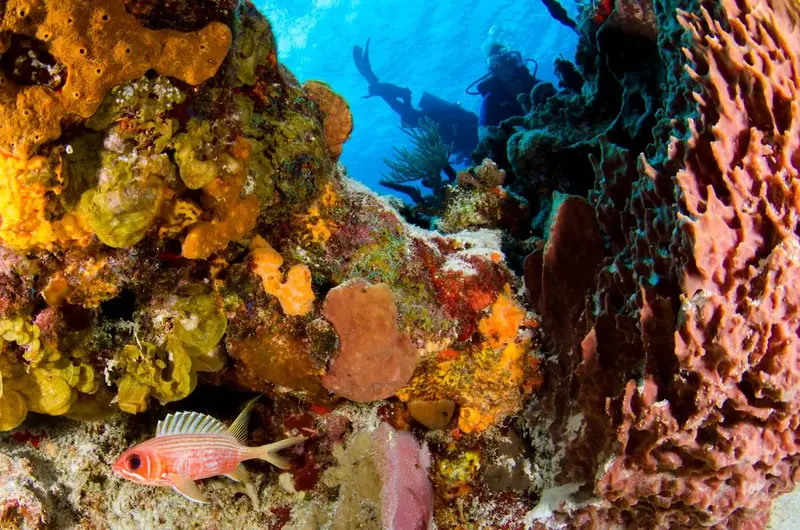
The federal median covers the whole zoology band, not only ocean roles. (Illustrative stock photo via Pexels.)
Here's the catch behind the headline: BLS runs no marine-biologist occupation code. Ocean practitioners sit inside zoologists and wildlife biologists, a band of about 18,200 workers spanning labs, agencies, zoos, and field stations. Its $72,860 median blends all of them, with the bottom tenth under $48,240 and the top tenth over $113,350.
That blending cuts both ways. It lends statistical rigor no self-report survey can match, but it also folds in higher-paid federal and senior roles a new reef-tech graduate will never touch. Read it as the occupation's center of gravity, not your offer letter.
Published means run higher than medians, near $75,740 in one OEWS vintage, because senior salaries pull the average upward. That gap is exactly why this guide quotes medians. The median describes the middle worker, while the mean describes the average dollar.
- Use it when: you need a citable, methodologically solid national figure
- Skip it when: you're pricing an entry aquarium or field-tech job, where surveys run lower
- Fact to confirm: BLS lists a bachelor's degree as typical entry for the whole band
Entry Reality: Near $50,000 and Competitive Doors
First jobs trade partly in experience, and the pay shows it. (Illustrative stock photo via Pexels.)
Self-reported marine-titled data tells the junior story: averages near $56,857 overall, about $50,718 with under a year of experience, and $55,050 at one to four years. The reported range stretches from the mid-$30,000s to near $98,000, which mirrors a field split between seasonal field gigs and career posts.
Expect competition to explain the discount. Marine biology draws far more graduates than funded positions, so entry employers can offer experience-heavy, pay-light packages. Passion subsidizes the first rung here more than in most sciences.
Close the gap deliberately. Stack boat-handling, dive certification, GIS, or statistical programming beside the degree, since postings reward tool-ready hires. Each practical skill converts directly into starting-pay leverage.
- You'll love it if: you value field time over starting salary and can afford the trade
- Walk away if: you need strong early earnings, since this field back-loads rewards toward credentials
- Fact to confirm: survey figures are self-reported averages, methodologically thinner than BLS medians
The Climb: Degrees, Feds, and the Top Decile
Advanced degrees unlock the research and federal seats that pay best. (Illustrative stock photo via Pexels.)
Pay grows with credentials more steeply here than in most biology-adjacent work. Master's and doctoral holders claim the research, federal-agency, and senior consulting seats that populate the upper deciles past $113,350. Federal employment in particular pairs strong medians with stability few nonprofits match.
The outlook tempers the dream honestly. BLS projects about 2 percent growth through 2034, adding roughly 300 jobs to a small base. Slower than average, tiny in absolute terms, and brutally competitive at entry as a result.
Settings split the field sharply. Federal and state agencies pair the strongest medians with stability, universities bundle research with teaching loads, nonprofits trade pay for mission time, and private consulting pays project to project. Name your preferred setting before your degree path, since each rewards different credentials.
- Grab it if: you're planning graduate school and targeting research or agency careers
- Leave it if: you want a bachelor's-only path to strong pay, which this field rarely offers
- Fact to confirm: the 2 percent outlook trails the all-occupation average, so plan differentiation early
Mistakes That Misprice This Career
After comparing federal tables with salary surveys and student forums, five errors warp expectations. Each swaps one measuring stick for another mid-comparison, and you'll dodge all five once you see them.
- Quoting averages as medians: survey averages and BLS medians answer different questions, so never subtract one from the other
- Ignoring the code gap: no marine-specific BLS code exists, so every "official" figure is a band approximation
- Pricing dreams at senior rates: top-decile pay belongs mostly to PhDs and feds, not first-year hires
- Skipping geography: coastal lab hubs cluster the jobs, so inland medians mislead in both directions
- Trusting a single survey: one site's average reflects its own sample, so triangulate BLS medians, two surveys, and live postings before deciding anything
- Missing grant cycles: soft-money research posts can vanish with funding, so weigh stability beside salary
Setup Tips to Research Pay Like a Pro
Open with the $72,860 BLS band median, then filter salary surveys to the bracket where you sit. Pull three current postings for your target role and note required degrees, since the degree line predicts the band. Email two working biologists about funding stability before committing to programs.
Volunteer or intern in your target setting before graduate applications. Field stations, aquariums, and labs all hire seasonal help, and a season inside beats a semester of guessing. Contacts from that season often matter more than grades when funded posts open, and you'll lean on them for years.
Marine Biologist Pay FAQ
How much do marine biologists make?
The BLS zoologist band medians $72,860, while marine-titled salary surveys average near $57,000. Use the federal figure for rigor and the survey figure for entry realism. Bring both when you negotiate, since employers respect candidates who know the range.
Why do marine biologist salary figures differ so much?
Different sources measure different groups: BLS covers a broad band including senior and federal roles, while surveys capture self-reported marine-titled workers. Methodology, not error, explains most gaps.
What is entry-level marine biologist pay?
Reported averages sit near $50,718 with under a year of experience and $55,050 at one to four years. Seasonal and nonprofit field roles anchor the low end.
What degree do marine biologists need?
A bachelor's degree is the typical entry credential per BLS. Research, federal, and top-decile roles generally expect a master's or doctorate.
Is the marine biology job outlook good?
Competitive. BLS projects about 2 percent growth through 2034, adding roughly 300 jobs. Small base plus high graduate interest keeps entry fierce.
Where do marine biologists work?
Federal and state agencies, universities, aquariums, nonprofits, and private consultancies, mostly clustered near coasts and major labs. Setting predicts pay nearly as well as seniority.
Bottom Line
Official band medians sit near $73,000 while entry surveys run near $50,000. Credential up for the seats that pay.
Related Guides
- How BLS OEWS Wage Data Works for Paramedics
- Overtime and Shift Differential Pay for Paramedics Explained
- Marine Biologist vs Oceanographer Pay Compared
- Marine Biologist Hourly and Contract Rates Guide
- Marine Biologist Salary by State 2026 Coastal Pay Gaps
- Federal NOAA Marine Biologist Pay Scale GS Grades Explained
- How to Become a Marine Biologist Degree and Experience Path
- Marine Biologist vs Wildlife Biologist Pay and Roles
- Entry Level Marine Biology Assistant and Tech Pay
- Marine Biologist PhD Premium and Research Pay
- Marine Biologist Job Outlook and Hiring Forecast 2026
- How Much Do Paramedics Make in 2026? (Salary, Hourly Pay and Top States)
- How Much Do Morticians Make in 2026? (Salary, Roles and Outlook)
- Where Is Belize in 2026 (Map, Reef, and What to Know)
- Where to Travel in Summer in 2026 (Beaches, Cool Escapes, and Festival Cities)
Sources: BLS — zoologists and wildlife biologists Handbook; PayScale — marine biologist salary; Photos: Pexels.