The Founder’s Survival Architecture: Systemic Strategies for Managing Startup Stress and Scaling Without Burnout

Affiliate Disclosure: This post may contain affiliate links, which means I may receive a small commission, at no cost to you, if you make a purchase through a link. Please read our disclosure for more info.
TL;DR: The Founder’s Survival Architecture
- Systematize, Don’t Optimize: Stop trying to “fix” your stress with willpower; instead, build operational systems (delegation, asynchronous workflows, and automated reporting) that remove you as the single point of failure.
- The Biology of Business: Treat your nervous system like a capital asset; sleep, nutrition, and cognitive recovery are not “self-care,” they are essential maintenance for your most expensive equipment: your brain.
- Radical Transparency: Most founder stress is caused by the gap between reality and the narrative presented to investors and teams; closing this gap via radical transparency reduces the cognitive load of maintaining a facade.
The startup environment is, by definition, a high-stress, high-stakes ecosystem. You are attempting to build something from nothing, often with limited resources, extreme time pressure, and the weight of employee livelihoods on your shoulders. The common advice—“take a vacation” or “meditate more”—is insufficient for the reality of scaling a company.
To deal with startup stress, you must shift your perspective from “managing emotions” to “architecting a resilient business.” Stress in a startup is rarely a personal failing; it is usually a structural symptom. When your business processes are brittle, your nervous system absorbs the friction. This article serves as the definitive architecture for founders to manage stress, maintain cognitive clarity, and scale without sacrificing their health or their venture.
The Physiology of Founder Stress: Understanding the Amygdala Hijack
Founder stress is a physiological reality, not just a mental state; understanding how your nervous system responds to the “startup fight-or-flight” cycle is the first step to mitigating it.
When you are deep in a seed round or facing a critical product launch, your body produces cortisol and adrenaline. In short bursts, this is useful; it keeps you sharp. In chronic states, it leads to decision fatigue, poor sleep, and eventually, burnout. Founders often operate in a state of “chronic arousal,” where the brain remains hyper-vigilant even during downtime.
To manage this, you must treat your biological state as a KPI. If your resting heart rate is elevated, or your sleep quality is poor, your decision-making capacity is compromised. This isn’t about “wellness”—it is about maintaining the cognitive bandwidth required to solve complex business problems.
The Founder’s Physiological Checklist:
- Monitor HRV (Heart Rate Variability): Use a wearable device to track recovery. If your HRV is consistently low, your body is not recovering from the stress of the previous day.
- The 90-Minute Rhythm: Human focus follows ultradian rhythms. Work in 90-minute blocks, then force a 10-minute “hard disconnect” where you do not look at screens.
- Light Exposure: Get direct sunlight within 30 minutes of waking. This sets your circadian rhythm, which is the foundation of your ability to handle stress the following day.
The Decision Audit: Reducing Cognitive Load
Most founder stress stems from “decision fatigue,” the psychological phenomenon where the quality of your choices deteriorates after a long session of decision-making.
You are making hundreds of micro-decisions daily. Each one consumes a finite amount of mental energy. To combat this, you must categorize decisions and automate or delegate the low-leverage ones.
The Decision Matrix
Use this framework to sort your daily tasks and reduce the weight on your shoulders.
| Decision Type | Definition | Action |
|---|---|---|
| High Stakes / High Impact | Fundraising, hiring, strategy, product-market fit. | Founder handles personally (Deep Work). |
| Low Stakes / High Frequency | Scheduling, minor email, social media, admin. | Delegate, automate, or outsource. |
| High Stakes / Low Frequency | Legal issues, major partnerships. | Consult experts; use templates/playbooks. |
| Low Stakes / Low Frequency | Office supplies, minor process tweaks. | Ignore or delegate to team leads. |
Authority Tip: If you are still making decisions about office software, team lunch orders, or minor scheduling, you are failing to scale. Your time is worth hundreds of dollars per hour; your administrative time should be zero.
Financial Anxiety and Runway Management
Financial stress is the leading cause of founder burnout, but it is almost always solvable through radical transparency and proactive communication.
The fear of running out of cash creates a “scarcity mindset” that causes founders to make short-term, panic-driven decisions. This creates a feedback loop of bad outcomes and increased stress.
The Runway Security Framework
- The 12-Month Rolling Forecast: Never look at cash flow month-to-month. Maintain a rolling 12-month model. If you see a dip in 9 months, you have 9 months to fix it. This removes the “surprise” factor that drives anxiety.
- Scenario Planning: Create three cash flow models: “Best Case,” “Base Case,” and “Worst Case.” When you know exactly what you would do if revenue dropped by 50% (e.g., cut specific vendors, pause hiring), the fear of that outcome dissipates.
- Investor Alignment: Most founders hide bad news from investors. This is a massive mistake. If you communicate a potential runway issue early, investors can provide advice or bridge capital. If you hide it until the last minute, you lose their trust and increase your stress.
Building a High-Performance, Low-Stress Team
A founder who is the “bottleneck” for every process will inevitably burn out; you must build a team that functions autonomously.
Stress is often a symptom of a lack of trust in your team. If you feel you must oversee every detail, you have either hired the wrong people or failed to provide the right documentation.
The Delegation Playbook
- Outcome-Based Management: Do not manage the process; manage the outcome. Define the goal clearly (e.g., “Increase lead conversion by 10%”), provide the resources, and step back.
- Asynchronous Communication: If your team relies on you to answer Slack messages instantly, you are creating a culture of interruption. Move to an asynchronous model where deep work is respected and response times are 4–24 hours, not seconds.
- The “No-Meeting” Wednesday: Protect your team’s (and your own) time by blocking out one day a week for deep work. This reduces the stress of “context switching,” which is a major contributor to mental fatigue.
The Architecture of Investor & Stakeholder Pressure
Investor pressure is often perceived as a personal attack, but it is almost always a structural requirement of their own business model.
When investors push for faster growth, it feels like they are questioning your competence. In reality, they are managing their own portfolio risk. Understanding this distinction is vital for your mental health.
Managing the Investor Relationship
- Set the Narrative Early: Do not wait for investors to ask for updates. Send a monthly investor update that is brutally honest. If you are behind on KPIs, state it, explain why, and outline the corrective action. This prevents the “anxiety of the unknown” for both you and them.
- The “No” Strategy: You have the right to push back on investor requests that do not align with the long-term vision. Frame your refusal in terms of data and business outcomes, not feelings. “We are focusing on retention over acquisition this quarter because the data shows higher LTV” is a rational, low-stress argument.
- Board Management: Use your board as a resource, not a jury. If you are stressed about a specific strategic decision, bring it to the board as a problem to solve together, not a failure you are hiding.
Operational Resilience: The “Systematization” Checklist
To remove stress, you must remove yourself from the critical path of daily operations.
Use this checklist to audit your current workload. If a task appears on this list and you are doing it personally, you are creating unnecessary stress.
- Standard Operating Procedures (SOPs): Are there written documents for every repeatable task in your company? If not, create them.
- Knowledge Base: Is there a centralized place (Notion, Confluence) where the team can find answers without asking you?
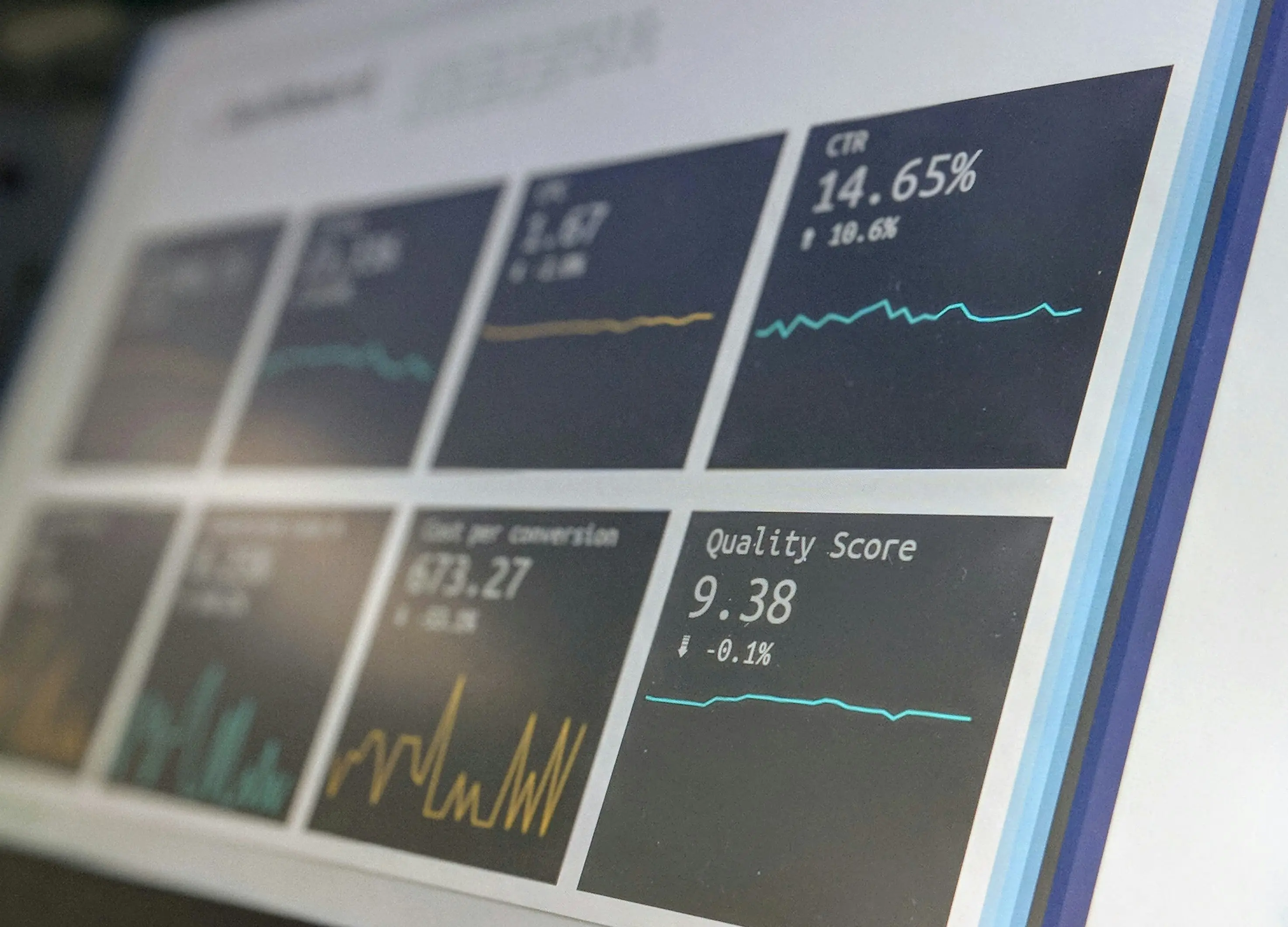
- Automated Reporting: Do you have a dashboard (Looker, Tableau, or even a simple Google Sheet) that shows you the health of the business in real-time? If you have to ask for a report, you are wasting time.
- Hiring Playbook: Do you have a repeatable process for hiring, onboarding, and training? If hiring is a chaotic, ad-hoc event, it will stress you out every time you need to scale.
The Psychological Trap: Imposter Syndrome and the Founder Identity
Many founders suffer from the belief that they are “faking it” and will eventually be found out; this creates a constant, low-level hum of anxiety.
Imposter syndrome is a byproduct of high-growth environments where you are constantly tackling problems you haven’t solved before. It is not a sign of incompetence; it is a sign of growth.
Reframing the Founder Identity
- Growth Mindset: Accept that you are a student of the business. You are not expected to know the answer; you are expected to be the one who finds the answer.
- Peer Groups: Join a founder community (EO, YPO, or industry-specific groups). Realizing that other founders are struggling with the exact same issues is the most effective antidote to the isolation of startup stress.
- Professional Coaching: A business coach is not a therapist, but they can help you navigate the psychological challenges of leadership. They provide an objective mirror to your decision-making.
Biological Maintenance: The Founder’s Hardware
Your brain is the hardware of your startup; if the hardware is failing, the software (your strategy) cannot run.
Founders often sacrifice sleep and nutrition to “work harder.” This is a mathematical error. A sleep-deprived brain makes poor decisions, which leads to more work, which leads to more sleep deprivation.
The Founder’s Performance Protocol
- Sleep Hygiene: Treat sleep as a non-negotiable meeting. 7–8 hours is the baseline. Use blackout curtains, temperature control (65°F/18°C), and zero screen time 60 minutes before bed.
- Fueling: High-sugar, high-carb diets lead to energy crashes. Prioritize protein and healthy fats to maintain steady cognitive function throughout the day.
- Movement: You do not need to train for a marathon. 30 minutes of zone 2 cardio (walking, light cycling) is sufficient to clear cortisol and improve neuroplasticity.
Crisis Management: Handling the “Bottom”
Every startup will face a near-death experience. How you handle it determines whether you survive or burn out.
When the crisis hits (a major client churns, a funding round fails, a key hire leaves), the temptation is to panic. Instead, follow this protocol.
- The 24-Hour Rule: If the crisis is not an immediate legal or safety issue, give yourself 24 hours to process the initial emotional shock before making a major decision.
- The “Worst-Case” Simulation: Sit down and write out exactly what happens if the business fails. Usually, you realize that while it would be painful and embarrassing, it is not fatal. This realization removes the paralyzing fear.
- Radical Focus: When in crisis, cut everything that is not essential to survival. If it doesn’t directly impact revenue or product-market fit, kill it.
The Long-Term Performance Lifecycle
Startup stress is not a sprint; it is an ultra-marathon. You must pace yourself for the long term.
Many founders burn out in the first 18 months because they treat every day like a crisis. You must learn to distinguish between “urgent” and “important.”
Establishing Sustainable Growth
- The Quarterly Review: Every 90 days, take a step back. Review your stress levels, your team’s performance, and the business trajectory. Are you moving in the right direction?
- The Exit Mindset: Whether you plan to sell or build a legacy, operate as if the company is an asset that must be able to function without you. This creates a “sellable” business and a “livable” life.
- Celebrate Wins: Founders are wired to look at the next problem. Force yourself and your team to stop and celebrate milestones. This releases dopamine, which is the biological fuel for resilience.
Frequently Asked Questions (FAQ)
How do I know if I am dealing with “normal” startup stress or actual burnout?
Normal stress is situational—you are stressed about a specific deadline or deal. Burnout is systemic—you feel cynical, detached, and physically exhausted regardless of the current workload. If you find yourself dreading the workday consistently for more than a month, you are likely in burnout territory and need to take drastic steps to reduce your load.
Is it possible to scale a startup without high stress?
It is possible to scale without chronic, destructive stress. You will always have pressure, but you can build systems that contain that pressure. If you are constantly “stressed out,” it is a signal that your business architecture is broken, not that you are weak.
How do I tell my investors I’m feeling burned out?
Don’t use the word “burned out” immediately. Frame it as a “leadership transition” or “operational restructuring.” Tell them: “I am shifting my focus from daily operations to high-level strategy to ensure the company scales effectively.” This sounds like a mature leadership decision, not a personal crisis.
Can I delegate my way out of all stress?
No. You cannot delegate the responsibility of the founder. You can, however, delegate the execution of the work. The goal is to move from being a “doer” to an “architect.”
What if my co-founder is the source of my stress?
Co-founder conflict is the #1 reason startups fail. You must address this immediately. Use a neutral third party (a coach or mediator) to facilitate a conversation. If you cannot align on vision and work ethic, you may need to discuss a buyout or separation. It is better to have a difficult conversation now than to let the business die from internal friction.
Should I see a therapist?
Yes. Every high-performance athlete has a coach; every high-performance founder should have a therapist or executive coach. It is not an admission of failure; it is an investment in your most valuable asset: your mind.
This guide provides the framework for survival, but the execution remains in your hands. Build the systems, guard your biology, and remember: your startup is a business, not your identity. Scale accordingly.
Was this article helpful?

Emily Holmes
Emily is a seasoned business strategist and the founder of Remington Croft. With over a decade of experience, including time at McKinsey, she helps entrepreneurs scale with data-driven systems. Read more.